
Turn Digital Discovery Into Real Customer Conversations
TAF helps businesses create clearer, more responsive ways for customers to ask questions, request information, connect with the right next step, and continue the conversation across their broader Digital Presence.
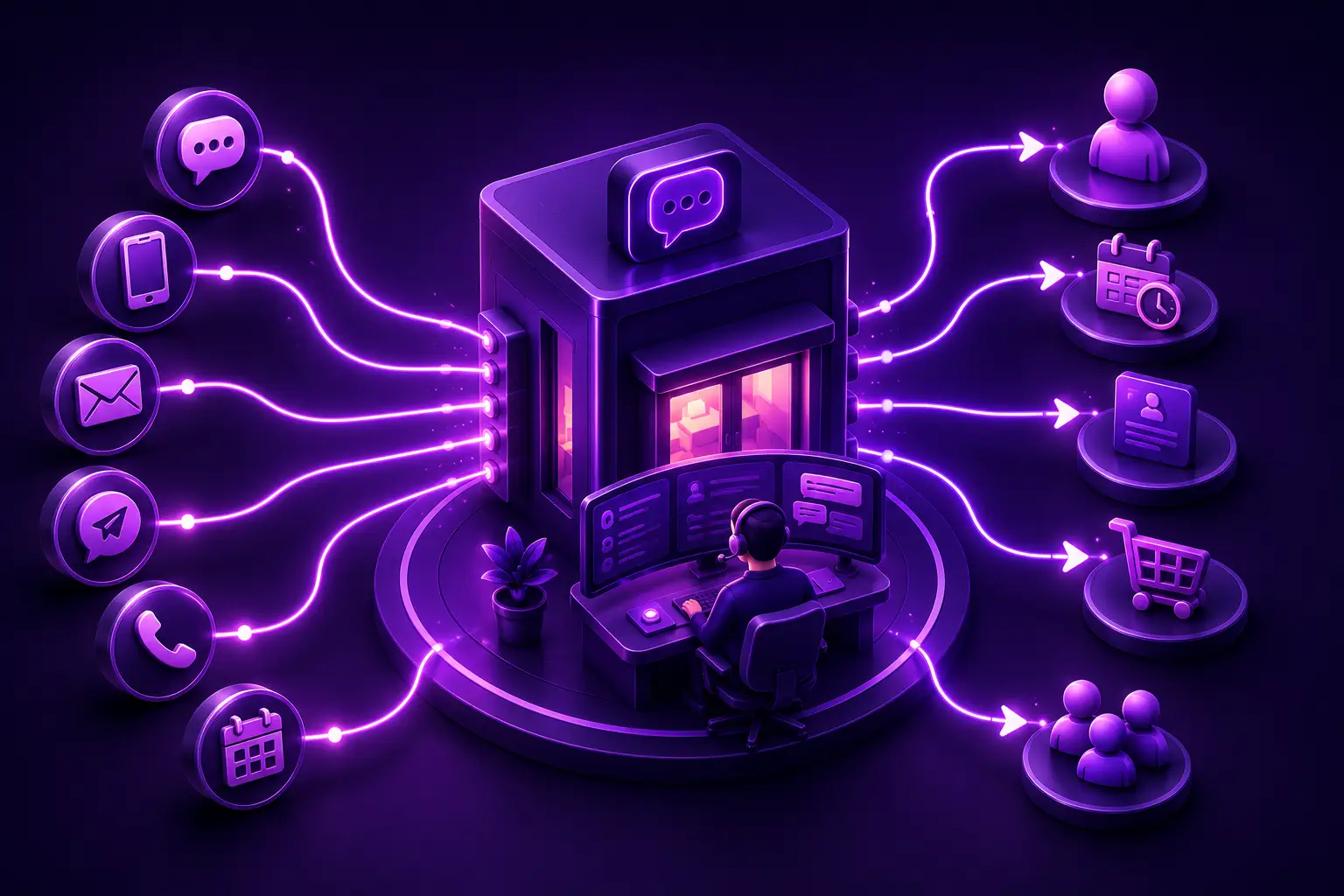
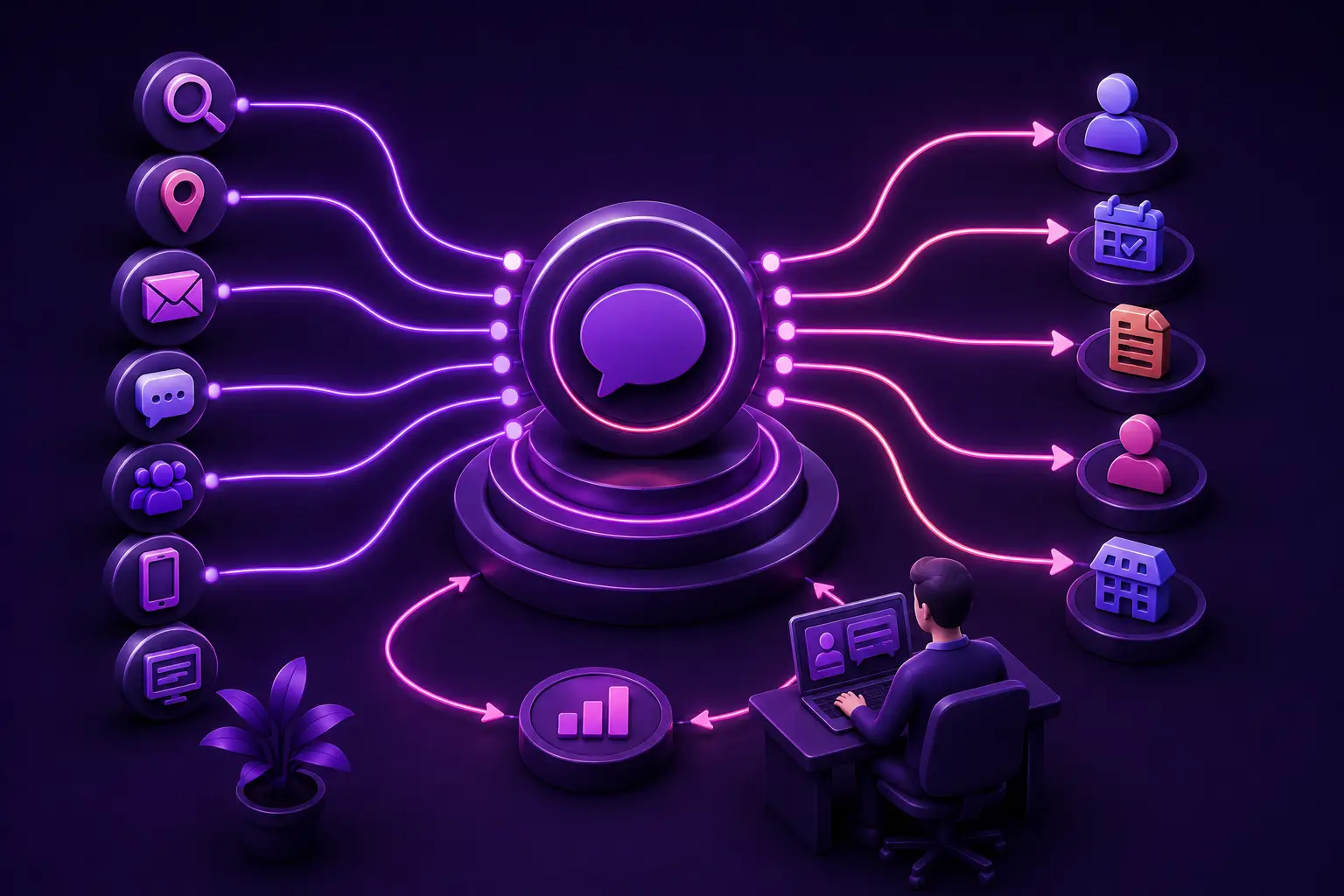
Signals mapped into structured conversational flows.
Discovery Is Only the Beginning
A potential customer may discover your business through search, maps, reviews, AI-assisted discovery, social media, listings, or your website. That visibility matters—but discovery is only the beginning.
Customer Engagement begins when someone decides to interact: asking a question, requesting information, scheduling, calling, messaging, or taking another meaningful next step.
A strong Digital Presence should make that transition from being discovered to starting a conversation as clear and convenient as possible.
What Customer Engagement Actually Means
Customer Engagement is the interaction layer of Digital Presence. It includes the communication pathways that allow customers to ask questions, start conversations, request information, reach the appropriate next step, and continue interacting with your business over time.
Initiate Contact
Give customers clear, convenient ways to begin a conversation through the channels that make sense for your business.
Responsive Routing
Help direct inquiries toward the appropriate information, person, service, or next step based on the capabilities and workflows available.
Conversation Continuity
Maintain context and appropriate follow-up so an initial inquiry can develop into a useful ongoing customer interaction.
Connect → Respond → Route → Follow Up → Learn
A practical engagement workflow helps move customer inquiries from initial contact to the appropriate next step while creating opportunities to improve the experience over time.
1. Connect
Give customers clear, appropriate ways to begin a conversation.
2. Respond
Acknowledge inquiries and provide useful information through supported communication channels.
3. Route
Direct questions or requests toward the appropriate information, person, service, or workflow.
4. Follow Up
Maintain continuity when additional communication or action is appropriate.
5. Learn
Review recurring questions, interaction patterns, and available signals to identify ways to improve the customer experience.
Engagement Is More Than Chat
Customer Engagement extends beyond a website chat box. Depending on the business, customers may communicate through messaging, forms, text, social channels, phone calls, scheduling tools, and other supported pathways.
Live Messaging
Give customers a convenient way to ask questions and begin a conversation through supported messaging channels.
Smart Forms
Collect the information needed to understand an inquiry, service request, or customer need and guide the appropriate next step.
Text Messaging (SMS)
Support direct customer communication and follow-up through text messaging where the service and customer permissions allow.
Social DMs
Help businesses manage customer conversations that begin through supported social channels.
Scheduling Pathways
Give customers clear ways to request or schedule appointments, consultations, or other appropriate next steps where supported.
Inquiry Routing
Help direct incoming inquiries based on available information, workflow rules, business needs, and supported capabilities.
Available communication and automation capabilities vary by tools, integrations, permissions, service level, and business requirements.
The Website as a Primary Engagement Hub
Your website is more than a place to publish information. As a first-party digital property, it can also provide clear pathways for visitors to ask questions, request service, schedule, call, submit information, or take another appropriate next step.
- Ask questions or start a conversation
- Request an appointment, consultation, or service
- Submit information through appropriate forms
- Call, message, or continue to another customer pathway
Human Communication & Automated Assistance
Automation can improve responsiveness and help manage repetitive communication, while people remain essential when an interaction requires judgment, empathy, expertise, or additional context.
Automated Assistance
Supported automation can help handle appropriate routine steps and reduce unnecessary communication friction.
- Acknowledge incoming inquiries
- Answer appropriate routine questions using approved information
- Support rule-based routing and next steps
- Prepare information or responses for review where appropriate
Human Communication
People remain important when a conversation requires judgment, sensitivity, expertise, or a more personal response.
- Respond directly to sensitive or complex situations
- Apply business expertise and contextual judgment
- Handle exceptions, disputes, or unusual circumstances
- Build relationships through meaningful personal interaction
Technology Supports Humans. It Doesn't Replace Them.
Use automation where it improves responsiveness. Keep people involved where judgment and relationships matter.
Business Knowledge Supports Better Conversations
Automated and AI-assisted systems can only work with the information available to them. Accurate hours, services, locations, policies, frequently asked questions, and other approved business information help support more useful and reliable customer interactions.
Your website remains an important first-party source of truth, helping establish the information that other engagement workflows can reference where appropriate.
- Clear First-Party Business Information
- Consistent Information Across Customer Touchpoints
- Structured Information for Search, AI & Customer Workflows
APPROVED BUSINESS INFORMATION
Single Repository (FAQs, Hours, Rules)
Messaging & Assistance
Search & Information
Human Support
Conversations & Next Steps
Questions • Requests • Messaging • Follow-Up
Customer Engagement Within Digital Presence
Visibility helps customers find and understand your business. Customer Engagement provides the pathways that allow them to interact with it.
It connects the information, trust, search visibility, content, and other signals across your Digital Presence to actual customer questions, conversations, requests, and appropriate next steps.
- Website & Search — Help customers discover the business and understand what it offers.
- Listings & Reputation — Reinforce accurate information and customer trust.
- Social & AI Visibility — Create additional discovery, context, and interaction opportunities.
- Customer Engagement — Turns those signals into conversations, requests, and next steps.
What TAF Actively Manages
TAF helps businesses plan, configure, and improve the communication pathways that connect customers to the right information and next steps. The exact level of management depends on the tools, integrations, service level, and needs of the business.
Strategy & Configuration
Define appropriate communication channels, customer pathways, integrations, permissions, and engagement objectives.
Knowledge & Workflows
Organize approved business information and configure supported workflows for questions, requests, routing, and follow-up.
Monitoring & Optimization
Review engagement activity, identify recurring friction or information gaps, and adjust supported workflows as business needs evolve.
Customer Engagement vs. Reviews & Reputation
They are connected parts of the customer lifecycle, but they serve different purposes.
Customer Engagement
Direct communication and interaction between the business and its customers before, during, or after a customer relationship.
Scope
- Questions and inquiries
- Messaging and follow-up
- Routing and customer pathways
- Ongoing customer communication
Reviews & Reputation
Customer feedback and public trust signals that help other people understand experiences with the business.
Scope
- Review requests
- Public review responses
- Reputation monitoring
- Customer feedback and trust signals
They Work Together to Strengthen the Customer Experience
Strong customer interactions can contribute to better customer experiences, while reviews and public feedback provide another view into how the business is performing.
Customer Engagement vs. Email & SMS Marketing
They may use some of the same communication channels, but they support different types of interaction.
Customer Engagement & Messaging
Primarily supports direct communication driven by individual customer questions, actions, requests, or service needs.
- Customer inquiries and responses
- Two-way communication
- Routing and next-step workflows
- Transactional or service-related follow-up
Email & SMS Marketing
Primarily supports business-initiated communication sent to audiences or customer segments.
- Promotions and announcements
- Newsletters and educational campaigns
- Audience segmentation
- Nurture and recurring outreach
Different Objectives. Connected Strategy.
These services can complement one another while remaining distinct parts of the larger Digital Presence system.
AI-Assisted & Agentic Engagement
AI-assisted and Agentic capabilities can support appropriate Customer Engagement workflows by helping retrieve approved business information, prepare responses, identify intent, route inquiries, and surface conversations that may require human attention.
Exact capabilities depend on the systems, integrations, permissions, and workflows available. More complex or sensitive interactions should continue to involve human judgment where appropriate.
- Retrieve approved business information for routine questions
- Assist with response preparation
- Support routing and escalation workflows
- Surface conversations that may require human attention
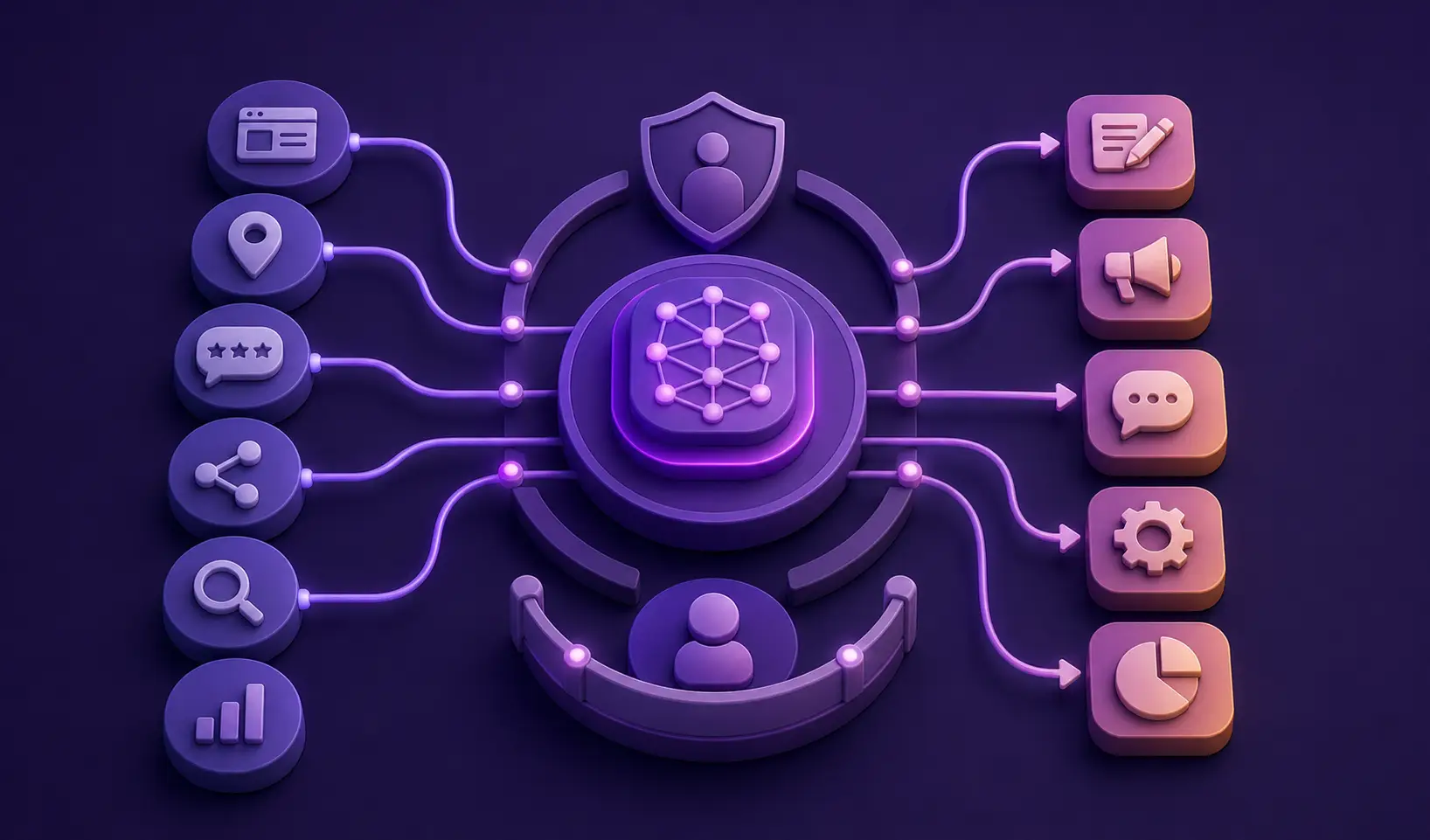
AI-assisted systems may help coordinate information retrieval, routing, response preparation, and other approved engagement tasks depending on available capabilities.
When a Human Should Step In
Automation can help with routine communication, but sensitive, unusual, or high-impact situations often require human judgment, context, empathy, or expertise.
Professional or Specialized Advice
Medical, legal, financial, or other regulated guidance should be handled through appropriate qualified professionals and established business processes.
Emergencies & Safety
Urgent situations involving health, safety, security, or other immediate risks should follow the business’s established human escalation procedures.
Complex Judgment
Complaints, unusual circumstances, and ambiguous situations may require context that predefined workflows cannot reliably provide.
Pricing & Business Exceptions
Custom pricing, unusual requests, exceptions, or other significant business decisions should receive appropriate human review.
Disputes & Sensitive Complaints
Chargebacks, disagreements, escalated complaints, and other conflict-sensitive situations often require direct human involvement.
Sensitive Information
Interactions involving confidential, regulated, or highly sensitive information should follow appropriate privacy, security, and human-review procedures.
Automation drives speed. People handle judgment.
Use automation for appropriate routine work while keeping people involved when context, sensitivity, expertise, or business judgment matters.
Is Managed Customer Engagement Right for Your Business?
Managed Customer Engagement may be useful when customer inquiries are recurring, communication is spread across multiple channels, or important follow-up is becoming difficult to manage consistently.
Recurring Inquiries
Your team regularly answers the same questions about services, availability, business information, or next steps.
Response Inconsistency
Customer responses vary depending on who is available, which channel they use, or when the inquiry arrives.
Multiple Channels
Customers contact you through several different channels, making it harder to maintain context and consistent follow-up.
Unclear Customer Pathways
Visitors can find your business, but the next step—asking a question, requesting service, scheduling, or getting help—is not always obvious.
Repeated Basic Questions
Your team spends significant time answering routine questions that could be supported by clear, approved business information.
Unorganized Follow-Up
Important inquiries, handoffs, or next steps sometimes get delayed or missed because follow-up is not consistently organized.
Visibility Is More Useful When Customers Can Act on It
A strong Digital Presence helps customers discover and understand your business. Customer Engagement helps create clear pathways for those customers to ask questions, request information, connect with the right next step, and continue the conversation.
What Does Your Digital Presence Need Next?
You don’t need to know which tool or service you need before talking with TAF. Start by understanding where your Digital Presence is strong, where gaps may exist, and whether Customer Engagement is one of the areas that deserves attention.