Stay Connected With Customers Beyond the First Interaction.
RETENTION & ENGAGEMENT
Staying Visible Means Staying in Touch.
A customer may visit your website, follow your business, make a purchase, request information, or interact with you once and then move on with their day. Email and SMS give businesses a permission-based way to continue providing useful information after that first interaction—without depending on someone to repeatedly rediscover the business on their own.
The goal is not simply to send more messages. It is to create useful, relevant communication that gives people a reason to stay connected.
STRATEGY DEMYSTIFIED
What Email & SMS Marketing Actually Means
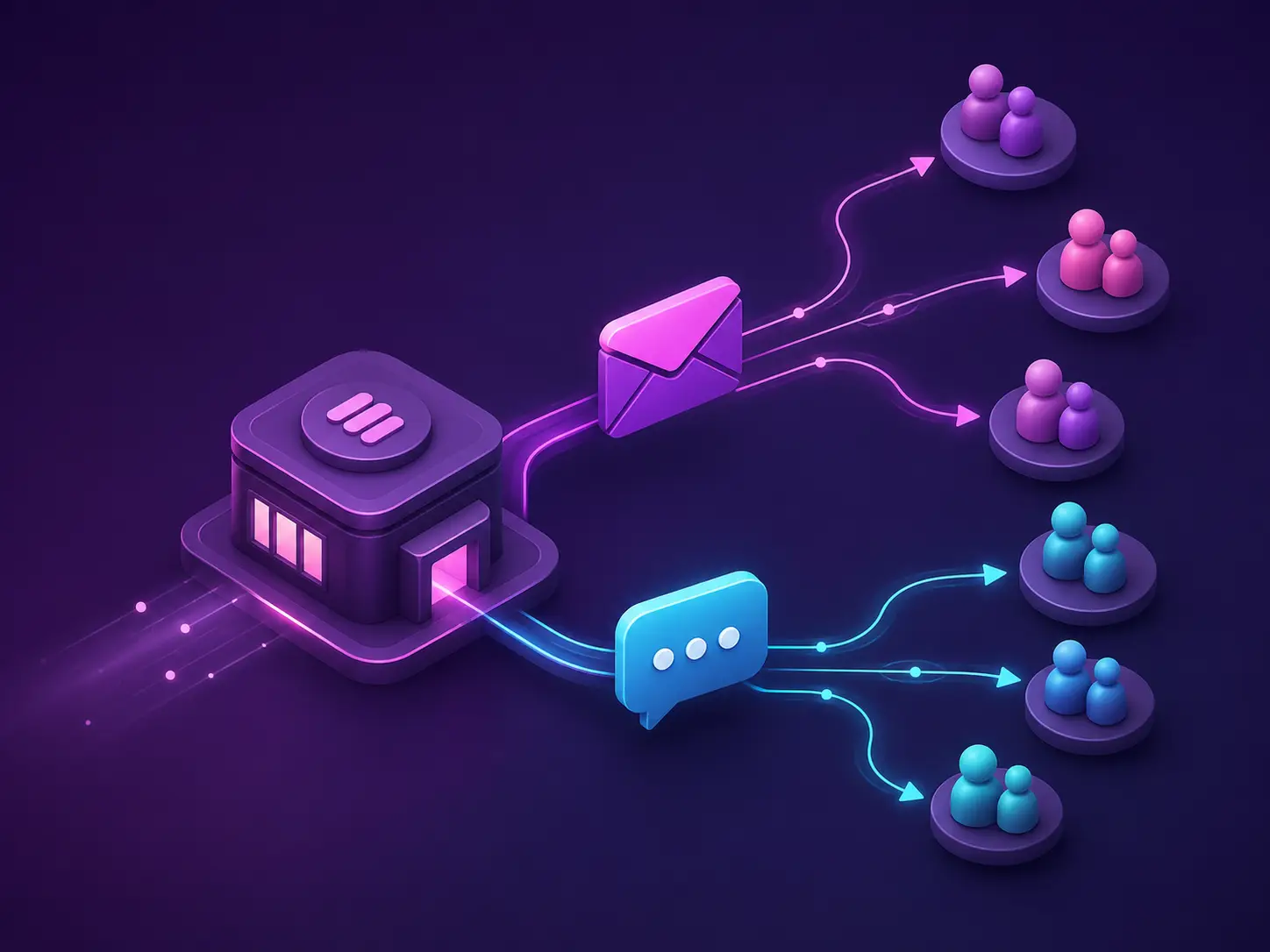
Email & SMS Marketing is planned, business-initiated communication sent to appropriate audiences for purposes such as education, announcements, promotions, reminders, and ongoing nurture.
Planned Communication
Define what the business needs to communicate, who should receive it, when it should be sent, and which channel makes sense.
Relevant Audiences
Organize contacts into useful groups so every subscriber or customer is not automatically treated the same.
Ongoing Connection
Maintain appropriate communication over time rather than relying only on isolated campaigns or one-time promotions.
Plan → Segment → Communicate → Nurture → Learn
A practical Email & SMS strategy connects business goals, appropriate audiences, useful messaging, and available performance information.
Plan
Define the audience, purpose, message, timing, and appropriate channel.
Segment
Organize contacts using useful and permitted information so communication can be more relevant.
Communicate
Deliver appropriate email or SMS content through supported tools.
Nurture
Maintain useful communication over time rather than relying only on one-off messages.
Learn
Review available campaign signals and use what they show to inform future communication.
Email and SMS Serve Different Communication Needs
Better suited to communication that may require more context, information, design, or longer-form content.
IDEAL USE CASES
- Newsletters & educational content
- Announcements & business updates
- Promotions & event information
- Nurture sequences
SMS
Better suited to concise, timely communication where a short message and clear next step are appropriate.
IDEAL USE CASES
- Reminders & brief updates
- Timely promotions
- Short announcements
- Simple calls to action
The Core Principle: The right channel depends on the message, audience, permissions, timing, and business need.
Reach the Right People With the Right Permission
Sustainable email and SMS marketing starts with appropriate audience relationships. Businesses should communicate with people who have a legitimate reason to receive those messages and respect their communication preferences.
Build Appropriate Audiences
Collect contact information through legitimate customer, subscriber, and lead-generation pathways.
Respect Opt-In Choices
Use appropriate permission and consent practices for the type of communication being sent.
Honor Opt-Outs
Give recipients appropriate ways to unsubscribe or stop receiving marketing communication.
Maintain Audience Quality
Keep contact information organized and avoid relying on purchased, scraped, or unrelated contact lists.
Different Messages Serve Different Purposes
Newsletters
Share recurring business updates, educational information, useful resources, and relevant news.
Promotions
Communicate timely offers, campaigns, or other appropriate calls to action.
Announcements
Share new services, events, operational changes, or important business updates.
Educational Campaigns
Provide useful information that helps customers understand the business, its services, or the problems it helps solve.
Nurture Sequences
Use planned communication over time to stay connected with appropriate audiences.
Re-Engagement
Reconnect with existing subscribers or customers where appropriate and permitted.
Available campaign and automation capabilities vary by tools, integrations, audience permissions, workflow configuration, and service level.
AUDIENCE SEGMENTATION
Not Every Contact Needs the Same Message
Audience segmentation helps businesses organize contacts into useful groups so communication can better match the recipient’s relationship with the business or the purpose of the campaign.
Customers & Prospects
Separate people who already have a customer relationship from those still learning about the business.
Interests & Services
Organize audiences around relevant services, topics, or stated interests where appropriate.
Location
Send geographically relevant information when location meaningfully affects the communication.
Customer Journey
Segmentation should make communication more relevant—not make customers feel monitored.
HEALTHY ENGAGEMENT
Consistent Communication Should Still Be Useful
Staying in touch does not mean sending messages simply because automation makes it possible. Frequency, relevance, timing, and usefulness all affect how an audience experiences a campaign.
THE NUTURING OBJECTIVE
The objective is not more messages. It is better communication.
Useful Cadence
Communicate often enough to remain relevant without overwhelming the audience.
Educational Value
Give people useful information in addition to promotions.
Clear Purpose
Every campaign should have a reason to exist and an appropriate next step.
Communication Preferences
Respect the audience’s choices about whether and how they want to hear from the business.
How Email & SMS Fit Within Digital Presence
Website & First-Party Authority
Provides information, resources, offers, and destinations that campaigns can point people toward.
Social & Content Presence
Provides public, recurring communication and content across the broader Digital Presence.
Customer Engagement
Supports customer-driven questions, requests, and direct conversations.
Email & SMS Marketing
Provides planned, business-initiated communication to appropriate audiences.
Customer Feedback & Advocacy
Helps businesses learn from customer experiences and create appropriate feedback, referral, and advocacy pathways.
Lead Funnels & Automation
Connects campaign traffic to landing pages, forms, conversion paths, and broader workflow logic.
Email and SMS are communication channels within Digital Presence—not substitutes for the rest of it.
Marketing Communication & Customer Conversations Are Related—but Different
Email & SMS Marketing
Primarily business-initiated communication sent to appropriate audiences for planned outreach.
COMMON EXAMPLES
- Newsletters & recurring updates
- Promotions & announcements
- Educational campaigns
- Nurture sequences
- Audience communication over time
Customer Engagement & Messaging
Primarily communication driven by an individual customer question, request, action, or service need.
COMMON EXAMPLES
- Customer inquiries
- Direct messaging
- Service questions
- Inquiry routing
- Interaction-specific follow-up
Use AI to Support the Work—Not Replace the Strategy
Brainstorm & Draft
Help develop campaign ideas, outlines, and initial message drafts.
Repurpose Content
Help adapt existing business content into appropriate email or SMS formats.
Explore Variations
Create subject-line, headline, or message variations for consideration.
Organize Campaigns
Help structure campaign information, content, or audience-related work where supported.
Summarize Performance
AI can help support appropriate parts of the workflow. People still define the strategy, context, permissions, and business objectives.
What TAF Actively Manages
TAF helps businesses plan and manage Email & SMS Marketing as part of their larger Digital Presence.
Strategy & Planning
Campaign Setup & Execution
Develop supported campaign content, organize audiences, configure campaigns, schedule communication, and coordinate appropriate automation where included.
Monitoring & Improvement
Review available performance signals, identify opportunities, and adjust future communication based on what the business learns.
Use Campaign Performance to Inform What Comes Next
Available campaign data can help businesses understand how audiences interact with email and SMS communication and identify opportunities to improve future campaigns.
Delivery & Opt-Out Activity
Review available delivery information, bounce activity, unsubscribes, and opt-outs to identify potential list or campaign issues.
Clicks & Responses
Review clicks, replies, and other available interaction signals to understand which messages or calls to action received attention.
Campaign Traffic & Tracked Actions
Where tracking is properly configured, review campaign traffic and selected actions to better understand what happened after someone interacted with a message.
A Note on Open Rate Limitations
Email open data can be highly affected by privacy protections and platform-level tracking technology. While useful as a directional signal with proper context, it should not be treated as a flawless, precise measure of individual customer engagement.
Performance data helps inform the next campaign. It does not guarantee the next outcome.
Communication Is One Part of the Conversion Path
Email and SMS may be part of a larger customer journey, but sending the message and building the system around that message are different types of work.
The Communication Layer
Owns the planned email and SMS messages sent to appropriate audiences, including the content, timing, audience, and campaign purpose.
- Email & SMS campaigns
- Newsletters & announcements
- Promotions & educational communication
- Nurture messaging
The Conversion System
Owns the broader pathways that connect campaign traffic to landing pages, forms, lead capture, next steps, and supported workflow automation.
- Landing pages
- Lead-capture forms
- Conversion paths
- Workflow and automation logic
The two can work together: Email & SMS delivers the communication, while funnels and automation can provide the pathways and workflows that support what happens next.
Is Managed Email & SMS Marketing Right for Your Business?
Managed Email & SMS Marketing may be useful when a business already has or is building an appropriate audience but lacks a consistent strategy for staying in touch.
Existing Customer or Subscriber Audience
You have people who have an appropriate reason to hear from the business.
Inconsistent Communication
Outreach happens occasionally but lacks a dependable schedule or strategy.
No Regular Newsletter
Useful business updates, education, or announcements are not being shared consistently.
Underused Audience
The business has appropriate contacts but rarely communicates with them beyond individual transactions.
Recurring Promotions or Announcements
The business regularly has useful updates, events, offers, or information to communicate.
Multiple Audience Needs
Different customer or subscriber groups would benefit from different communication.
The goal is useful, appropriate communication—not unnecessary marketing complexity.
What Does Your Digital Presence Need Next?
You do not need to know whether you need email campaigns, SMS, Customer Engagement, funnels, social content, or another specific service before talking with TAF. Start by understanding where your Digital Presence is strong, where gaps may exist, and what deserves attention next.